


Resin & Epoxy
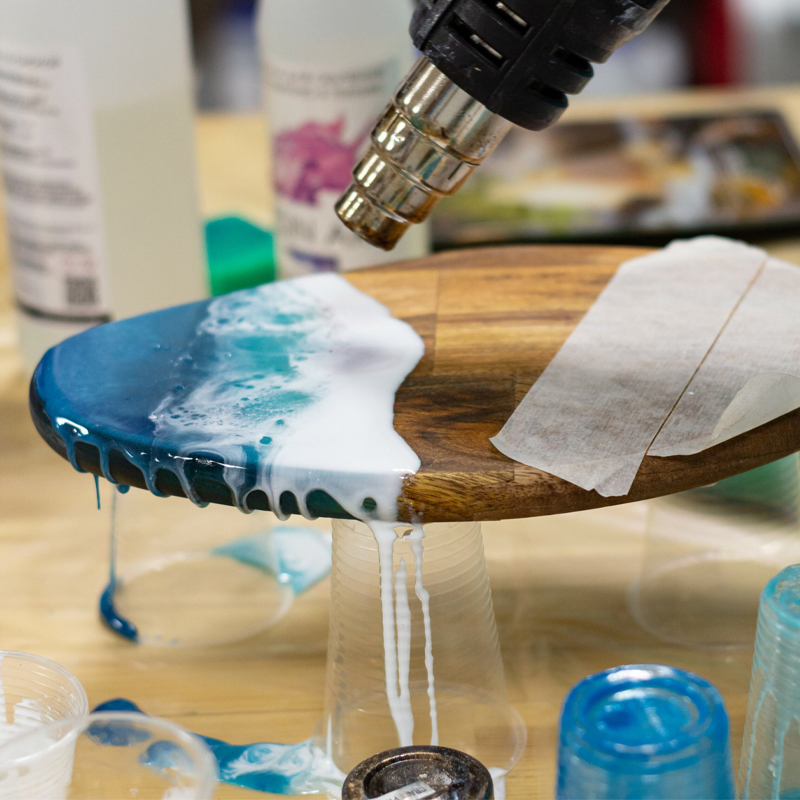
What is Resin?
Resin refers to organic compounds, either synthetic or natural, that are characterized by high viscosity. Natural resins are typically transparent, highly flammable, and range in color from yellow to brown. They are soluble in organic solvents like ether but insoluble in water. Synthetic resins share physical properties with natural resins but differ in their chemical composition and manufacturing processes.
Natural resins are derived from the secretions of trees, such as pine trees, often as a response to damage from fire, wind, or lightning. These resins have been largely replaced by synthetic resins in modern industries due to the latter’s enhanced properties and versatility.
Types of Resins
Resins can be classified based on their origin and drying process:
- Based on Origin:
Natural Resins: These are flammable, transparent, and found in shades of yellow to brown. They are formed from plant secretions and are soluble in organic solvents but insoluble in water.
Synthetic Resins: These have similar physical properties to natural resins but differ chemically. Synthetic resins are further divided into:
Thermoplastics: Resins that become pliable when heated.
Thermosetting Resins: These resins do not soften when heated and are insoluble.
- Based on Drying Process:
Convertible Resins: These resins, such as alkyd, epoxy, amino, phenolic, polyurethane, and silicone resins, undergo polymerization after application, forming a film that covers surfaces.
Non-Convertible Resins: Resins like cellulose, chlorinated rubber, vinyl, and acrylic resins dissolve or disperse in a solvent and form a sticky film after solvent evaporation.
Common Types of Synthetic Resins
Synthetic resins are produced through cracking processes, which involve heating various hydrocarbons to break down their molecules. Polymer compounds are then synthesized to create specific types of resins.
Some common types of synthetic resins include:
Rosin: Derived from tree sap and known for its low cost. It has limited water and chemical resistance.
Ester Gum: Produced from the reaction of rosin with glycerol, used in varnishes due to its good gloss and adhesive properties.
Penta Resin: Formed by reacting pentaerythritol with rosin, known for its high melting point and thermal stability.
Coumarone-Indene Resin: Derived from coal tar, resistant to corrosive agents but has poor color stability.
Phenolic Resins: Synthetic resins from phenol and formaldehyde, ideal for coatings due to their water resistance and durability.
Maleic Resin: Compatible with nitrocellulose and ideal for quick-drying lacquers.
Alkyd Resins: Used in commercial paints and coatings, known for their flexibility and durability.
Amino Resins: Used in baking finishes and automotive coatings, often combined with other resins for enhanced properties.
Vinyl Resins: Copolymers of polyvinyl chloride and polyvinyl acetate, known for their resistance to chemicals and moisture.
Epoxy Resins: Known for their strong adhesion, chemical resistance, and durability, widely used in coatings and adhesives.
Polyester Resins: Used in industrial coatings for their good color retention and flexibility.
Acrylic Resins: Thermoplastic resins used in automotive and industrial coatings for their resistance to water, chemicals, and UV light.
Silicone Resins: Known for their high heat resistance and chemical stability, used in high-performance coatings.
Difference Between Resin and Epoxy
While the terms “resin” and “epoxy” are often used interchangeably, they refer to different types of materials with distinct properties and applications.
Resin: A general term that encompasses both natural and synthetic materials. Resins are used in various applications, including coatings, adhesives, and composites. They can be thermoplastic or thermosetting, and their properties vary widely depending on their chemical composition and formulation.
Epoxy: A specific type of synthetic resin known for its strong adhesion, chemical resistance, and durability. Epoxy resins are usually thermosetting and require a hardener to cure. They are widely used in applications that demand high strength and durability, such as coatings, adhesives, and composite materials.
In summary, while all epoxies are resins, not all resins are epoxies. Epoxies are a specialized subset of resins with unique properties that make them suitable for more demanding industrial applications.