


Methanol

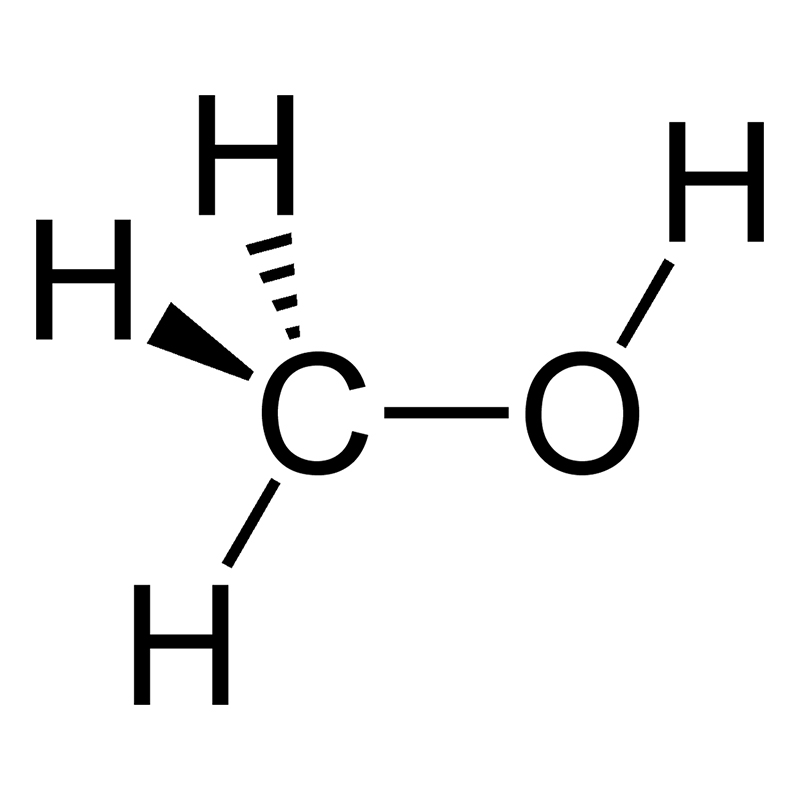
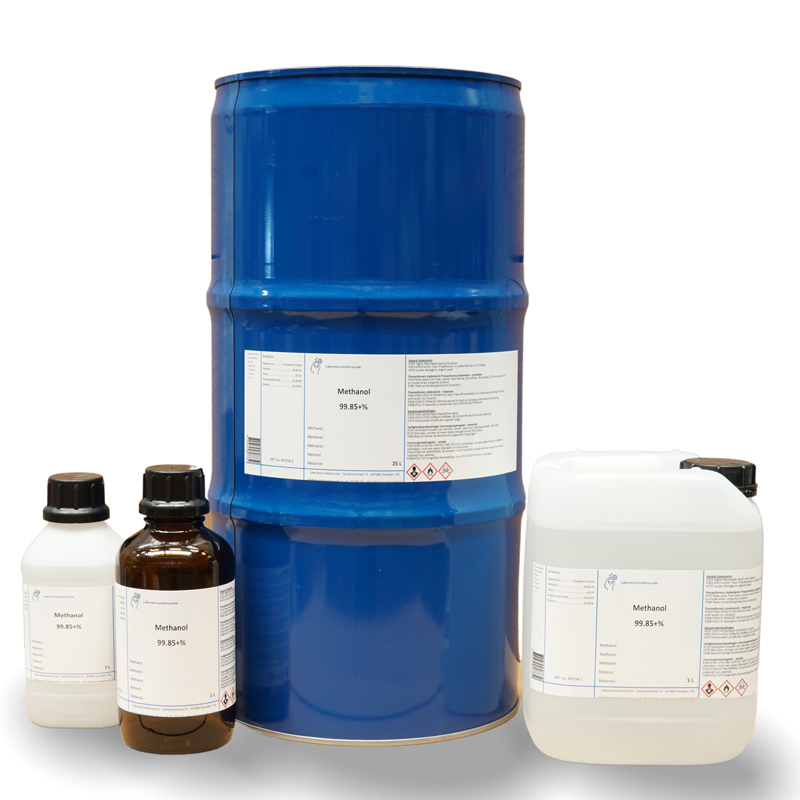
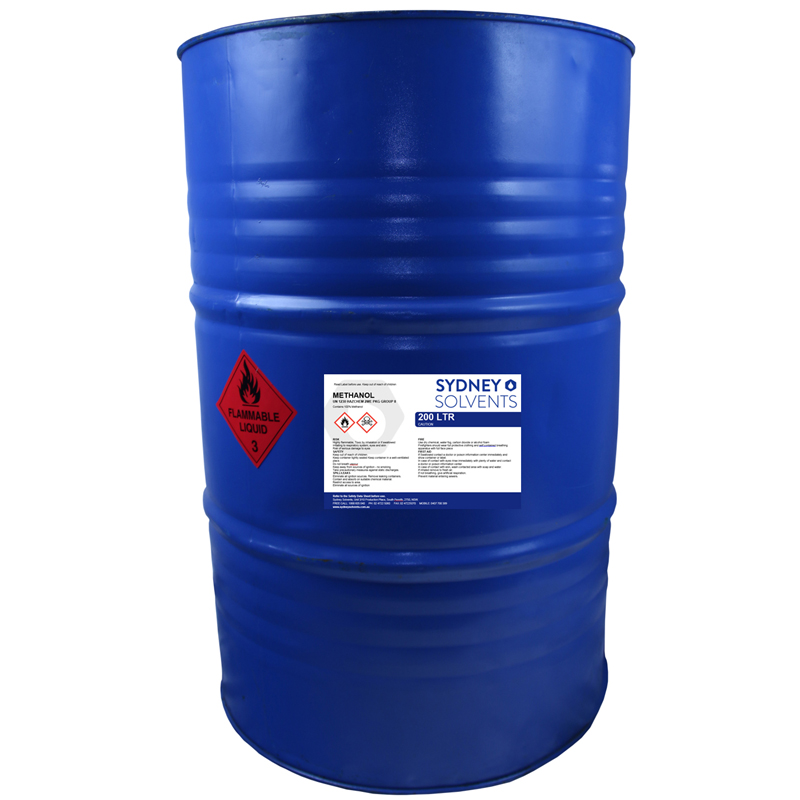
Methanol, commonly referred to as methyl alcohol, wood alcohol, methyl hydrate, or wood spirit, is the simplest form of alcohol with the chemical formula CH₃OH. It is a clear, colorless liquid, known for its ability to produce carbon dioxide and water when combusted in air. This substance is also notoriously recognized as a toxic compound, which can be fatal if ingested.
Chemical Structure and Properties
Methanol consists of a methyl group (CH₃) attached to a hydroxyl group (OH), making it the simplest form of alcohol. Historically, methanol was produced by the destructive distillation of wood. However, modern production involves the direct combination of carbon monoxide and hydrogen gases using a catalyst. Increasingly, methanol is synthesized from syngas, a mixture of hydrogen and carbon monoxide derived from biomass.
Methanol has a boiling point of 64.96°C (148.93°F) and solidifies at -93.9°C (-137°F). It is fully miscible with water and burns with a non-luminous flame, forming explosive mixtures with air.
Toxicity
Methanol has a mild alcoholic odor similar to ethanol, but it is far more dangerous. Consuming methanol, even in small quantities, can lead to blindness or death, which is why it is often referred to as a denatured alcohol when used in industrial applications.
Industrial Significance
Methanol is a key raw material in chemical synthesis. Its derivatives are crucial for manufacturing a wide range of products, including synthetic dyes, resins, pharmaceuticals, and perfumes. Methanol is often converted into dimethylaniline for dyes and formaldehyde for synthetic resins. Below are some of its significant applications:
Automotive Antifreeze: Used as a component in antifreeze formulations for vehicles and as a fuel for camping stoves.
Alternative Fuel: Methanol serves as a high-octane, cleaner-burning alternative to gasoline. It has attracted attention for its potential use in vehicles due to its cleaner combustion properties.
Industrial Solvent: Methanol is widely employed as a solvent for inks, adhesives, resins, and in the production of pharmaceuticals like vitamins and hormones.
Fuel Cells: Methanol is used as a hydrogen carrier in fuel cells, providing a renewable energy source.
Food Metabolism: Naturally occurring in fruits and vegetables, methanol can be produced in the human digestive system, aiding food metabolism.
Windshield De-icer: Although effective for de-icing, methanol-based solutions have been restricted due to their toxicity to humans.
Production Methods
The production of methanol has evolved significantly over time. Initially, it was produced by the catalytic hydrogenation of carbon monoxide derived from natural gas or coal. This method involved reacting hydrogen and carbon monoxide at high temperatures and pressures using a nickel catalyst. In the 20th century, a more efficient process was developed using a catalyst composed of copper, zinc oxide, and alumina, which operates at lower pressures and temperatures.
Modern Synthesis
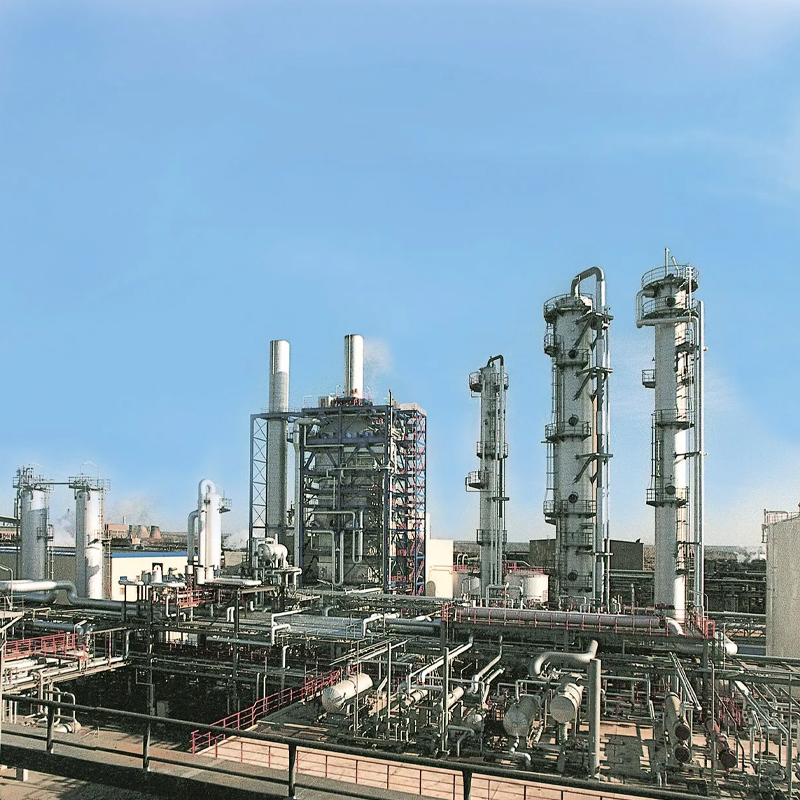
Today, methanol is primarily produced from methane found in natural gas. The process involves the reaction of methane with steam in the presence of a nickel catalyst at elevated temperatures to produce a synthesis gas mixture of carbon monoxide and hydrogen. This gas then reacts over a catalyst made of copper, zinc oxide, and alumina to produce methanol. This method was first utilized by ICI in 1966 and operates at pressures of 50-100 atmospheres and temperatures around 250°C.
Another method for methanol production involves reacting carbon dioxide with excess hydrogen, which results in the formation of methanol and water.
Global Production and Consumption
In 2019, the global methanol production capacity was approximately 146 million tons, with 18.7 million tons produced in the Middle East. The actual global methanol production volume for that year was about 97.9 million tons, with the Middle East producing 17.1 million tons. China emerged as the largest producer with a capacity of 67.7 million tons, accounting for 46% of the global output. Its actual production stood at 38.5 million tons.
Methanol’s significant role in the chemical industry is reflected in its usage for producing acetic acid, formaldehyde, and other chemical intermediates essential for various industrial applications. The Asia-Pacific region is the largest consumer of methanol, accounting for 60% of the global demand.
Applications in Industry
Formaldehyde Production: Widely used in the production of adhesives, disinfectants, and composite wood products. It is also used to create chemicals used in construction, automotive, healthcare, and consumer products.
Antifreeze in Vehicles: Methanol is used in vehicle radiators as an antifreeze component due to its unique chemical properties that lower the freezing point of water-based solutions while increasing their boiling point.
Chemical Solvent: Methanol serves as an industrial solvent for inks, resins, adhesives, and in the preparation of pharmaceuticals. It is used in the synthesis of cholesterol, streptomycin, vitamins, hormones, and other drugs.
Historical Context
The history of methanol is both fascinating and informative. Ancient Egyptians utilized a mixture of substances, including wood-derived methyl alcohol, for embalming mummies. Methanol was first isolated by Robert Boyle in 1661. However, it wasn’t until 1834 that Jean-Baptiste Dumas and Eugene Peligot determined its basic composition. The term “methyl” was derived from “methylene” around 1840 and was later renamed “methanol” by the International Union of Pure and Applied Chemistry (IUPAC) in 1892.
Technological Advancements
In 1923, German chemists Alwin Mittasch and Matthias Pier developed a method to synthesize methanol from synthesis gas, utilizing chromium and manganese oxide catalysts at high pressures and temperatures. By the early 1920s, more efficient production was achieved using copper-based catalysts operating at lower pressures.
The potential of methanol as a motor fuel garnered interest during the oil crisis of the 1970s, leading to the development of over 20,000 methanol-powered vehicles. However, the decline in methanol fuel’s popularity by the late 1990s was attributed to rising costs and waning consumer interest.